
The Walkable Life: Unlocking Value, Health, and Happiness in Your Home and Community
Imagine starting your day not with the groan of a traffic report, but with the gentle rhythm of your own footsteps. You step out your front door, and within minutes, you’re sipping a perfectly crafted coffee from the local roaster. Later, a short stroll takes you to a vibrant park for an afternoon break, and in the evening, you amble to a celebrated restaurant with friends, no ride-share or parking hassle in sight. This isn’t a futuristic fantasy; it’s the daily reality for residents of walkable neighborhoods in 2026. And it’s transforming more than just commutes—it’s revolutionizing how we live, work, and, most importantly for homeowners, how we value our properties.
In today’s hyper-connected yet often isolating world, the profound human need for connection—to our community, to local commerce, and to our own health—is driving a seismic shift in real estate priorities. “Walkability” has evolved from a trendy buzzword into the single most powerful non-structural feature of a home. It’s no longer just about having a sidewalk; it’s about possessing the key to a lifestyle that offers unparalleled convenience, sustainability, and well-being. For homeowners, this presents a monumental opportunity. If your home is in a walkable area, its inherent value is already elevated. But what if you could amplify that value exponentially? This guide explores why walkability is the cornerstone of modern living and how a strategic renovation can transform your well-located house into your neighborhood’s crown jewel.
Why Walkability is the #1 Home Feature in 2026
The data is unequivocal. As we move deeper into the 2020s, the demand for walkable urban and suburban living isn’t just growing—it’s dominating the market. The remote and hybrid work revolution, cemented post-pandemic, has untethered professionals from centralized business districts. People are choosing where to live based on quality of life, not proximity to a single office. This has ignited a fierce demand for neighborhoods that function as self-sufficient hubs, where daily needs and pleasures are accessible on foot.
For homeowners, this translates into tangible financial benefits. Studies consistently show that homes in walkable areas command a significant premium—often referred to as the “Walk Score premium.” In 2026, this premium isn’t just for downtown condos. Suburbs with established town centers, mixed-use developments, and accessible amenities are seeing the most dramatic value surges. But this value is nuanced. It’s not merely about having a high score; it’s about optimizing your home to fully capitalize on its prime location. The homes that sell fastest and for the most are those that seamlessly blend the location’s external convenience with impeccable internal function and flow.
The Tangible Benefits: More Than Just Steps
- Financial Upside: Homes in highly walkable areas retain value better during market fluctuations and appreciate faster. They appeal to a broader demographic, from young professionals and families to downsizing retirees, all seeking the same core convenience.
- Health & Wellness: Walkable design encourages incidental exercise, reducing stress and promoting cardiovascular health. Easy access to green spaces and human-scale streetscapes improves mental well-being.
- Community & Sustainability: Walkability fosters chance encounters and stronger neighborhood bonds. It dramatically reduces a household’s carbon footprint by minimizing car dependency, aligning with the growing eco-conscious ethos of buyers.
- Time & Convenience: Reclaim hours lost to driving and parking. The freedom to spontaneously meet a friend, grab last-minute ingredients, or enjoy a park is a priceless luxury that becomes part of your daily routine.
Capitalizing on Your Walkable Location: The Strategic Renovation Blueprint
Owning a home in a walkable neighborhood means you hold a winning lottery ticket. A strategic renovation is how you cash it in. The goal is to create a powerful synergy between your home’s interior and the vibrant life just outside your door. Your renovation should tell a story: “This is a home made for the walkable life.”
1. The Seamless Indoor-Outdoor Connection
When the world outside is an amenity, you want to feel connected to it. This is the most critical renovation focus for walkable homes.
- Statement Entries & Porches: Your front door is no longer just an entryway; it’s a transition point between community and sanctuary. Invest in a covered, inviting porch with comfortable seating—a “watch-the-neighborhood-go-by” spot. Upgrade to a bold, custom door that reflects your home’s character.
- Functional Mudrooms & Drop Zones: The walkable life means coming and going more frequently. A dedicated, organized space near the entrance for storing shoes, bags, reusable grocery totes, and dog leashes is essential to keep clutter at bay and maintain flow.
- Expansive Windows & Light Wells: Maximize natural light and views of tree-lined streets or community gardens. Consider installing larger windows, transoms, or even a strategically placed skylight to bathe your living space in sunlight and create a visual extension of the outdoors.
2. The Social Hub: Kitchen and Living Space Reimagined
Walkable living is inherently more social. Your home should be equipped to host impromptu gatherings when friends are just a short walk away.
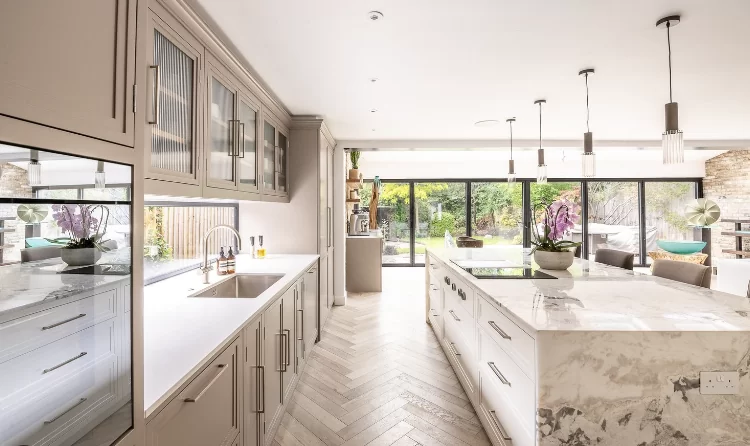
- Open-Concept Kitchen with a Coffee Bar: The kitchen becomes the heart. An open layout that flows into living areas is perfect for entertaining. Incorporate a dedicated coffee or beverage station—imagine serving espresso from your local roaster to guests gathered around a large island.
- Durable, Beautiful Materials: Choose high-traffic flooring like luxury vinyl plank or polished concrete that can handle the comings and goings of an active household. Easy-clean surfaces and robust finishes ensure your home looks pristine for last-minute visitors.
- Flexible Living Spaces: Create a nook that can serve as a home office (for the days you work remotely), a reading corner, or a play space. Multi-functionality is key in a home that’s constantly interacting with the community.
3. The Personal Sanctuary: Private Outdoor Space
Even in a social, walkable area, privacy is precious. Your private outdoor space should be a secluded retreat.
- The Low-Maintenance, High-Enjoyment Yard: Transform your backyard into an extension of your living space with a durable deck or patio, built-in seating, ambient lighting, and fire pit or outdoor heater for year-round use. Opt for native, low-maintenance landscaping.
- Al Fresco Dining & Cooking: An outdoor kitchen or a high-quality built-in grill takes advantage of fresh air and makes entertaining effortless, complementing the local dining scene just steps away.
The Local Advantage: Suburb Spotlight & The Renovation Imperative
Let’s examine how this plays out in real terms. Consider a sought-after, walkable suburb like Greenwood Commons. In 2026, the stats are telling:
- Average Walk Score: 78 (Very Walkable).
- Median Home Value: $985,000, a 22% increase over the past three years, significantly outpacing car-dependent neighboring areas.
- Key Amenities within a 15-minute walk: 12+ restaurants/cafés, 3 grocery stores, a weekly farmer’s market, 4 parks, a community center, and a boutique retail district.
- Market Demand: Homes here sell in an average of 22 days, compared to the regional average of 45 days.
In Greenwood Commons, a standard 3-bedroom home might sell for its median price. However, a recently renovated home with the features outlined above—a stunning porch, open-concept chef’s kitchen, and a resort-style backyard—is consistently selling for $1.2M+, representing a premium of over 20%. The renovation doesn’t just add cost; it multiplies the underlying location value. Buyers aren’t just paying for square footage; they’re paying for a turnkey, walkable lifestyle. They see a home ready for the very life they moved to the neighborhood to live, with no projects looming. This is the conversion power of a strategic renovation.
Your Next Step: From Potential to Perfection
Your home in a walkable neighborhood is already a gem. But in the competitive market of 2026, a gem needs the right setting to shine its brightest. A generic, dated interior undermines the premium your location commands. By investing in a renovation that consciously enhances the walkable experience, you do more than update a kitchen or add a porch. You future-proof your investment, maximize your equity, and create a home that delivers daily joy and unparalleled convenience.
The journey to unlock this potential begins with a vision that aligns your home’s design with the rhythm of your community. It requires a builder who understands not just construction, but the sociology of walkable living—one who can translate location advantages into architectural details and functional layouts.
Conclusion: Walk Towards Your Home’s Future
Walkability is more than a metric; it’s a philosophy for modern living that prioritizes connection, health, and time. As we look ahead, the divide between walkable neighborhoods and the rest will only widen, further elevating the worth of homes within them. The question for you as a homeowner is not if your property is valuable, but how valuable it can become.
Don’t let your home’s greatest asset—its location—be underutilized. A thoughtful, comprehensive renovation is the catalyst that transforms a house in a great location into the definitive home of that location. It’s an investment that pays dividends not only in resale value but in the quality of your everyday life. The path to that higher value and enriched living is clear. It starts, quite literally, with a single step—the step you take to reimagine what your home can be.